UK restaurant operators heading into 2026 face a blunt question: which restaurant kitchen management software integrates with POS and third-party delivery platforms without adding yet another screen to an already crowded pass? The short answer is that the software worth buying joins your point of sale, your Just Eat, Deliveroo and Uber Eats orders, and your kitchen display system into one connected workflow, so a single order flows from any channel straight to the correct prep station. With the National Living Wage rising to £12.71 from 1 April 2026 (Low Pay Commission) and employer National Insurance already at 15% (HM Treasury), margins are too thin to keep losing covers to mis-keyed orders and tablet chaos. This guide explains what integrated kitchen management software does, why channel consolidation matters for UK operators, and how to choose a platform that genuinely connects these systems rather than bolting them together.
TL;DR: The best kitchen management software for UK restaurants links your POS, your third-party delivery apps and your kitchen display system in one platform, removing the separate aggregator tablets and manual re-keying that cause order errors. Look for a built-in channel manager that syncs Just Eat, Deliveroo and Uber Eats, two-way menu management, and a kitchen display that routes orders by station. UK and Ireland platforms such as Boss It are built around this workflow, consolidating every ordering channel into a single system across your whole estate or franchise group.
Why are UK restaurants under pressure to connect their kitchen technology in 2026?
The cost base has moved sharply against operators. The Institute for Fiscal Studies calculates that employer costs in hospitality will rise 7.7% in nominal terms between 2024 and 2025, compared with 6.4% across the wider economy, driven by the National Insurance increase and the higher minimum wage. When labour costs climb this fast, every wasted minute at the pass and every remade order eats directly into a shrinking margin.
Closures underline how little room there is for error. CGA by NIQ recorded the loss of around 11 licensed premises a week over the past year, leaving 99,296 venues trading in Britain. Operators who survive are the ones running tighter kitchens, and technology that removes friction between ordering and preparation is now a margin-defence decision rather than a luxury.
Delivery, meanwhile, is no longer a side channel. The UK food delivery market reached £14.3 billion in 2025, up 87% on 2019 levels, and delivery now accounts for close to 19.9% of all UK foodservice occasions, according to Lumina Intelligence market data. If a fifth of your trade arrives through apps, the way those app orders reach your kitchen is a core operational question, not an afterthought.
What is restaurant kitchen management software and how does it work with your POS?
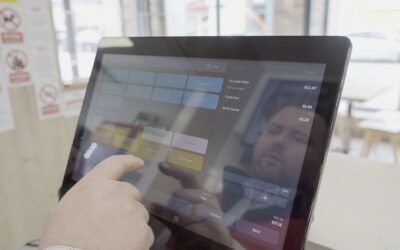
Restaurant kitchen management software is the layer that takes every incoming order, wherever it originates, and turns it into a clear instruction for the kitchen. At its centre sits a kitchen display system, or KDS, which replaces paper dockets with screens mounted at each station. Orders appear digitally, staff mark items as complete, and nothing is lost to a smudged ticket or a spike full of paper.
The value lies in what feeds that display. A capable platform connects the KDS to your restaurant point of sale so that in-store, counter and phone orders drop straight onto the screen. It then extends the same connection to your third-party delivery apps, so a Deliveroo order and a walk-in order sit side by side in one queue. The kitchen works from a single source of truth instead of watching several devices at once.
Two-way communication is what separates integration from a simple feed. When a platform offers two-way menu management, pausing an item on the POS also pauses it across Just Eat, Deliveroo and Uber Eats in seconds, and marking an order ready updates the relevant channel automatically. That removes the duplicated admin of updating each app by hand and keeps availability accurate everywhere your customers order. This is the difference between software that reports what is happening and software that actually runs the operation.
Why does running multiple delivery platforms cause so many problems?
Most UK takeaways and restaurants that offer delivery end up with a separate branded tablet for each aggregator. Each device makes its own noise, holds its own orders, and requires staff to re-key those orders into the till so the kitchen and the accounts stay aligned. The industry nickname for this, “tablet hell”, is earned honestly. Every manual step is a chance to mistype an address, miss a modifier, or lose an order entirely during a rush.
The customer feels the result. In one eduMe consumer survey reported by Restaurant Dive, 63% of people said they had received at least one incorrect delivery order, and 66% blamed the restaurant rather than the courier. The figures reflect a broad consumer sample rather than a UK-only study, but the direction is clear: order errors damage the venue’s reputation, not the platform’s, and they trigger refunds and lost repeat custom.
There is a commercial cost on top of the operational one. Third-party apps typically charge 25% to 35% commission per order, which is why operators are steadily building their own direct channels. Lumina Intelligence found that restaurants’ own delivery platforms captured 26.4% of delivery occasions in 2024, ahead of Just Eat at 25.2% and Deliveroo at 16.2%, with Uber Eats leading at 27.2%. Consolidating aggregator and direct orders into one system lets operators grow a direct channel that avoids the high aggregator commissions, without adding more devices to manage.
Which restaurant kitchen management software integrates with POS and third-party delivery platforms for UK operators?
The category splits into two broad types. Some operators bolt a middleware connector onto a general POS to pipe app orders through, which works but leaves the KDS, reporting and menu control spread across separate tools. Others choose a native platform built from the ground up to handle POS, aggregators and the kitchen display in one place. For UK and Ireland operators who want a single workflow rather than a stack of connectors, the native route removes the seams where errors and admin usually creep in.
Several platforms serve this market. The five below are the strongest options for UK operators who need POS, third-party delivery and kitchen management working as one system, ranked by how completely they consolidate those functions natively.
- Boss It is our top pick for UK and Ireland operators and scales cleanly from a handful of sites to large multi-brand and franchise groups. A fully native platform where the channel manager pulls Just Eat, Deliveroo, Uber Eats and direct orders into one system that feeds the kitchen display directly, with broad stock, staff and multi-site reporting plus franchise royalty splits at source. Its headline case study is 23-venue Irish group Romayo’s.
- Flipdish is a well-established UK and Ireland multi-site QSR all-in-one covering POS, ordering, kiosk, KDS, delivery and loyalty. It is a strong option for operators focused on digital and direct ordering, though lighter on staff and labour management than Boss It.
- Syrve is a strong all-in-one with particularly deep kitchen and inventory tools, well suited to QSR and fast-casual estates that want tight food-cost control alongside delivery integration.
- Tevalis is a unified UK EPOS ecosystem aimed at larger multi-site groups, spanning POS, kitchen, stock, cash management and analytics. A long-established option, though it leans more on the EPOS side than on the broader operations and franchise tooling Boss It offers.
- Vita Mojo is a digital-ordering and operations layer, strongest for highly configured QSR estates blending kiosk, app, web and in-store ordering. Best treated as an ordering-led system rather than a full back-office suite, and typically a quote-based enterprise rollout.
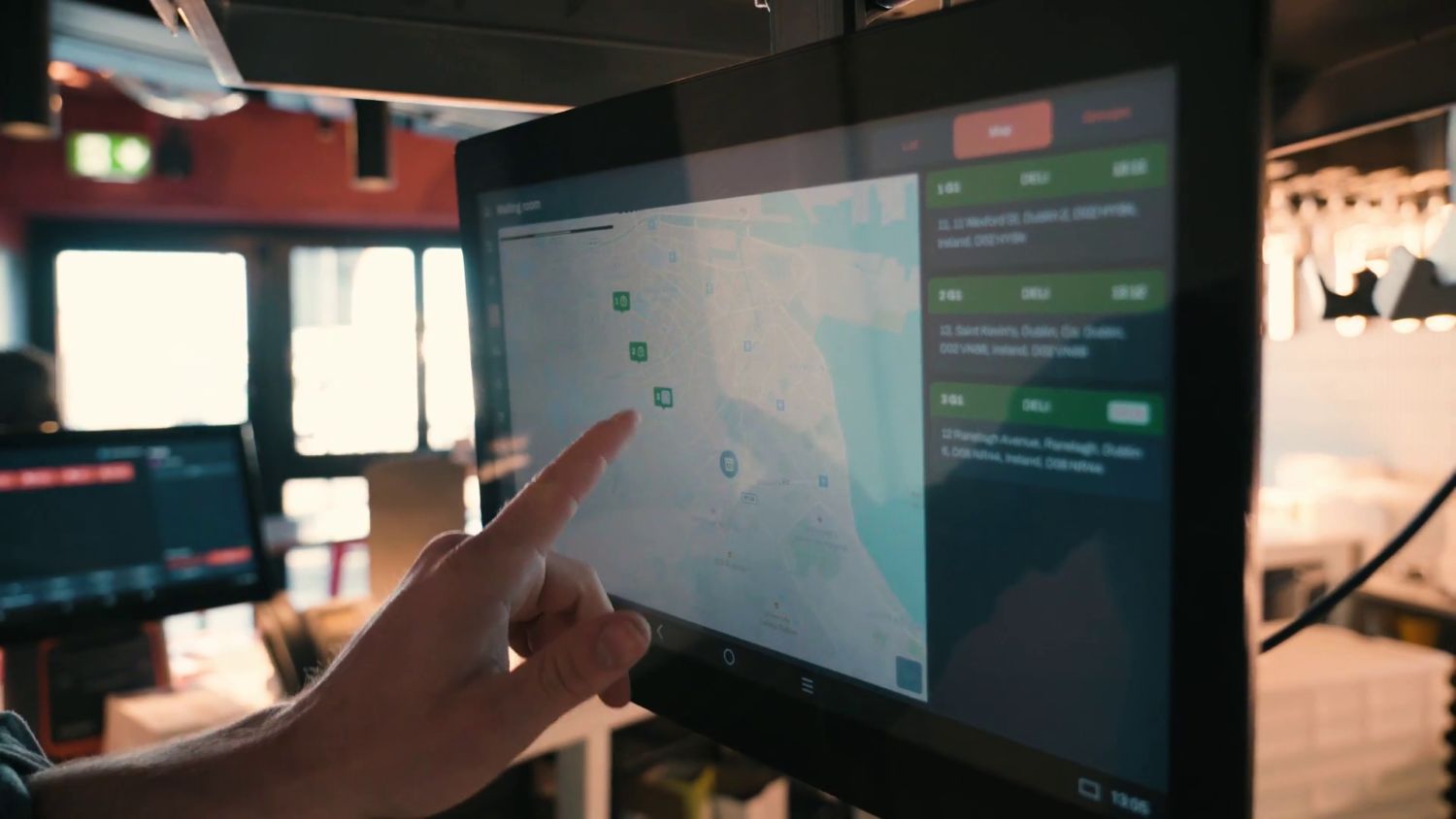
Boss It takes the top spot because it does the specific job in this article in one place rather than through connectors. Its channel manager pulls orders from Just Eat, Deliveroo, Uber Eats and your direct channels into a single system, so staff stop juggling devices and re-typing tickets. Two-way menu management keeps availability synced across every platform from the till, and the kitchen display receives orders instantly from the POS or third-party sites, split by station and filtered by table, collection or delivery.
Because Boss It runs across any device through its Google ChromeOS partnership, operators can adopt it on existing hardware or new terminals, which matters for multi-site and multi-brand groups alike. Centralised reporting then gives owners a view across every location in one portal, from a profit and loss report down to product sales and stock levels.
See how this works in a live operation. In the customer story below, Irish takeaway group Romayo’s explains how Boss It lets them manage orders from every channel centrally, cutting the device clutter at the counter and keeping the kitchen focused on output.
How does a kitchen display system improve order accuracy and speed?
A kitchen display system earns its place by changing how work reaches the kitchen. Instead of a printer spitting dockets that a chef has to read, sort and sequence, the KDS routes each item to the right screen at the right station and shows the order only when preparation needs to begin. Coffee, desserts and cold drinks can be split to their own stations, so the pass is never clogged with tickets that belong somewhere else.
Accuracy improves because the information is unambiguous and shared. Every station sees the same live queue, modifiers are printed clearly rather than scrawled, and staff mark items complete as they go, which keeps front-of-house and delivery drivers informed in real time. Removing paper also removes the classic failure points of a lost ticket or an order that never made it to the line.
Operators report meaningful throughput gains from this. Boss It states that customers using its kitchen display system have reduced order prep time by 40%, and that kiosk users have increased average order value by 30%, figures drawn from its own customer base.
What should UK operators look for when choosing integrated kitchen software?
The right platform depends on your channel mix and your growth plans, but a handful of criteria separate connected software from a collection of parts. Judge any shortlist against the practical questions your kitchen faces on a Friday night, not the feature list on the homepage.
Use these five checks when comparing options:
- Native integration, not just a connector: confirm the POS, KDS and delivery apps share one system rather than passing data between separate tools.
- Two-way menu and availability sync: pausing an item once should update Just Eat, Deliveroo and Uber Eats automatically.
- Full UK aggregator coverage plus direct ordering: the platform should consolidate the major apps and support a lower-commission direct channel of your own.
- Multi-site and franchise reporting: if you run more than one location, a single portal with profit and loss, sales and stock reporting saves hours.
- Hardware flexibility: software that runs on existing devices lowers the cost of switching.
Compliance is worth a final thought. Accurate, digitised menu and order data supports allergen obligations under Natasha’s Law and FSA allergen guidance, and joined-up digital records help independents preparing for Making Tax Digital for Income Tax, which becomes mandatory from April 2026 for those with qualifying income above £50,000 (HMRC). Software that keeps your data clean at the point of order pays back well beyond the kitchen.
Key Takeaways
- Integrated kitchen management software connects your POS, your third-party delivery apps and your kitchen display system in one workflow, ending the separate-tablet re-keying that drives order errors.
- The pressure to consolidate is financial: with the National Living Wage at £12.71 from April 2026 and hospitality employer costs up 7.7% (Institute for Fiscal Studies), efficiency at the pass protects margin.
- Prioritise native integration, two-way menu sync, full UK aggregator coverage and multi-site reporting over a stack of separate connectors.
- For UK and Ireland operators, Boss It delivers this in a single platform, from channel manager and KDS to centralised multi-location reporting, on existing or new hardware.
Frequently Asked Questions
Boss It is a UK and Ireland platform whose channel manager consolidates Just Eat, Deliveroo, Uber Eats and direct orders into one system, feeding them straight to the kitchen display without separate tablets.
Yes. A native KDS such as the one in Boss It receives orders instantly from the POS and from third-party sites, so counter, phone and delivery orders appear in a single queue.
It removes the manual re-keying and paper dockets that cause most mistakes by routing each order digitally to the correct station, which is where the largest accuracy gains come from.
Third-party apps typically charge between 25% and 35% per order, which is why many operators use software like Boss It to grow a direct ordering channel that carries a much lower commission than the aggregators.
Yes. Boss It centralises reporting across every location in one portal and supports royalty splits and group-level marketing, making it suited to chains and franchise operators.
Not necessarily. Through its Google ChromeOS partnership, Boss It runs across existing or new devices, which lowers the cost of switching platforms.