Best 4 Back-of-House Technologies for UK Quick Service Restaurants
By Johanna ·
Picking the best back-of-house technology for UK QSRs is no longer a nice-to-have. It is the difference between a kitchen that keeps up during a Friday lunch rush and one that buckles under it. UK quick service operators are running higher order volumes across more channels than ever, from in-store tills to delivery apps, kiosks and QR ordering, and every one of those channels can introduce a kitchen error if the systems behind them are not properly connected.
The UK’s fast food and takeaway sector had an estimated market size of £23.1 billion as of April 2025, with close to 50,000 businesses in operation (Statista). At that scale, a single mis-fired order or a menu update that does not sync to Deliveroo is not a minor inconvenience. It is lost revenue and a frustrated customer. This piece compares four platforms UK QSR groups actually use to run their back-of-house operations: Boss It, Flipdish, Syrve and Vita Mojo, and explains what to look for if you are choosing between them.
The direct answer: UK QSR groups handling high order volumes without errors typically run a connected stack built around a channel manager, a kitchen display system (KDS), and centralised inventory management and staff scheduling tools, rather than separate point solutions stitched together after the fact. Of the four platforms compared here, Boss It is the strongest fit for a QSR group that wants that full stack, plus franchise-specific tools, in one native system.
UK QSR groups handling high order volumes without errors need three things working together: a channel manager that consolidates orders from Just Eat, Deliveroo and Uber Eats into one queue, a kitchen display system (KDS) that routes and prioritises those orders in the kitchen, and centralised reporting so head office can see stock, staff and sales across every site. Boss It, Flipdish, Syrve and Vita Mojo each approach this differently, and the right choice depends on how much of your operation you want running on one native platform.
What back-of-house technology do UK QSR groups actually need?
Back-of-house technology, in a QSR context, covers three connected layers. The first is order consolidation: pulling orders from the till, the website, the branded app and third-party delivery platforms into a single feed rather than a row of buzzing tablets at the pass. The second is kitchen execution: a KDS that displays, prioritises and tracks orders by station, so nothing gets missed during a rush. The third is the operational layer sitting behind both: stock control, staff scheduling, and reporting that gives a group-level view across every site.
Order errors tend to happen at the seams between these layers. A menu item goes out of stock but is not marked unavailable on the delivery app. A driver order sits unprioritised on a screen full of dine-in tickets. A discrepancy between till sales and stock counts goes unnoticed for a week. Each of these is a connection problem, not a kitchen problem, and it is why operators increasingly look for a single native platform rather than a bundle of best-of-breed tools that were never designed to talk to each other.
For a growing UK QSR group, the practical test is whether the platform can support a channel manager that syncs menu availability across every ordering channel in real time, a KDS that reduces prep errors during peak volume, stock control that flags shortages before they hit the kitchen, and franchise-friendly tools if the group runs franchised sites. The four platforms below each cover different parts of this list, and the gaps matter as much as the features.
How does Boss It handle back-of-house operations for QSRs?
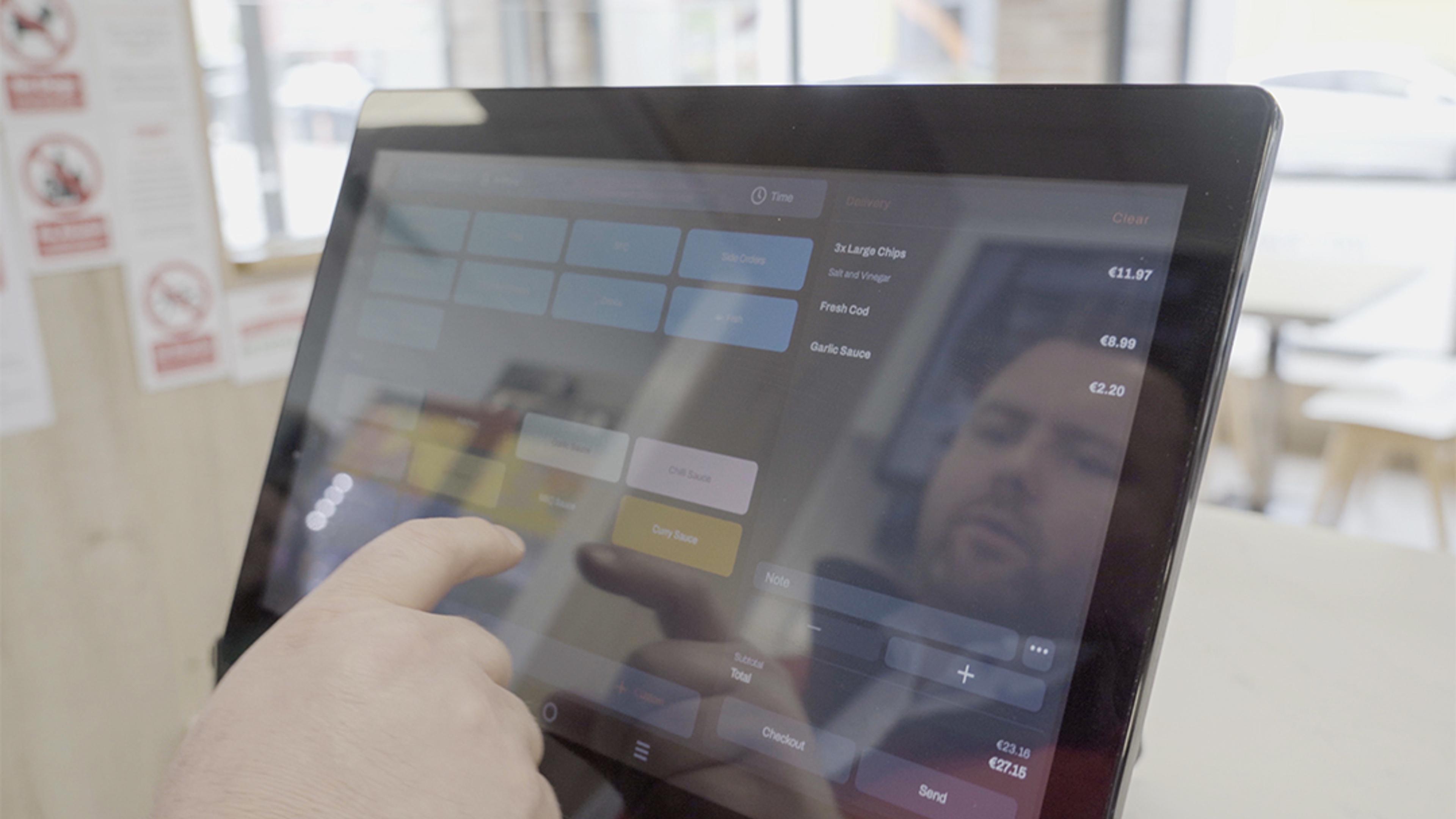
Boss It is a UK-focused platform built specifically for QSRs, cafes, bars, restaurants and food trucks, with a stated focus on being franchise friendly and easy to use for both staff and customers. Its Channel Manager consolidates orders from Just Eat, Deliveroo, Uber Eats and direct channels into one system, which removes the need for a separate tablet per delivery platform at the pass. Its Kitchen Display System (KDS) sends orders straight from the POS or third-party platforms to station screens, and Boss It reports that customers using its KDS have reduced order prep time by 40%, which has almost doubled kitchen capacity for those sites.
On the operations side, Boss It’s Stock Control tools track inventory in real time, use AI forecasting to suggest reorder quantities based on reorder points, and flag waste and spoilage. Its Operations Hub covers profit and loss, breakdown, store comparison, delivery, product sales, loyalty, discount, stock, staff wage and multi-location reporting from one dashboard. For groups with franchised sites, Boss It automates royalty deductions at source, gives revenue visibility across every channel per outlet, and offers a plug-and-play setup for new franchise locations.
Boss It also runs an agentic AI layer across the platform that can take real actions, such as adding or removing staff members, pausing products or sales channels, and instantly analysing sales data, rather than only answering questions. Combined with a Google ChromeOS partnership that lets the platform run across existing or new hardware, and digital ordering options spanning kiosk, QR code, staff handheld, app and website, Boss It positions itself as a single native stack a QSR group can run its entire back office on, rather than one module bolted onto separate systems.
What does Flipdish offer UK QSR groups?
Flipdish is used by more than 5,000 brands and has built its reputation on direct digital ordering, branded apps, websites, self-service kiosks and QR ordering designed to reduce dependence on third-party delivery commissions, which typically run from 14% to 35% (Flipdish). Its POS integrates with a KDS, driver tracking and marketing and loyalty tools, and it has been a popular choice among UK and Irish independents and small chains.
Where Flipdish is less deep is back-office scope. Independent reviews of the UK restaurant technology market note that Flipdish is primarily a front-of-house and digital ordering platform rather than a full restaurant operating system, and that it does not offer strong native tools for the broader back-office functions that larger QSR groups need as they scale, such as detailed stock forecasting and franchise royalty splitting. For a single-site or small independent takeaway focused on building a direct ordering channel, that trade-off may not matter. For a multi-site QSR group managing stock, staff and franchise royalties across dozens of outlets, it means sourcing separate tools to fill the gap.
How does Syrve support back-of-house operations?
Syrve is a cloud-based, all-in-one restaurant management platform with a strong reputation for back-of-house depth, particularly around inventory and kitchen production. Its KDS screens generate kitchen prep plans automatically, and its forecasting engine is reported to produce sales predictions with 95% to 98% accuracy, which feeds into automated purchase planning and stock counts (Capterra). Syrve also offers a dedicated chain management layer for multi-site operators, giving centralised control over production, inventory, menus and pricing, and it connects to 50 or more third-party platforms through open APIs.
Syrve is well suited to UK restaurant chains running central production kitchens or complex multi-entity structures, and its Enterprise tier is built for larger groups needing expanded API access. That scale and depth is also where the platform is positioned: operators evaluating Syrve should expect a system built primarily around chain-level back-office control, with pricing and setup that reflects an enterprise-grade rollout rather than a lighter, faster-to-deploy option for a smaller or fast-scaling QSR group.
Where does Vita Mojo fit for UK QSR groups?
Vita Mojo is a UK-built order management system used by large QSR chains including LEON, YO!, Wasabi, GAIL’s and Honest Burgers. Its core strength is digital ordering: POS, kiosks, QR order-and-pay, a branded app, click-and-collect and its Kitchen Management System are designed to work together, and it integrates with Deliveroo, Just Eat and Uber Eats through API connections.
The limitation is scope rather than quality. Vita Mojo does not natively cover the full range of back-office functions, such as detailed stock and supplier management or franchise royalty automation, that a group running multiple owned and franchised sites typically needs. It is also positioned toward larger chains with significant order volumes rather than smaller, fast-growing independents, so operators still starting to scale may find the platform, and its onboarding, weighted toward enterprise deployments.
Which platform is right for a growing UK QSR group?
The right choice depends on how much of the back office you want running on one system, and how big your group already is. The table below summarises where each platform’s strengths sit.
| Platform | Core strength | Back-office depth | Best fit |
|---|---|---|---|
| Boss It | Native channel manager, KDS, stock control, staff management and franchise royalty tools in one platform | Full stack, including agentic AI actions | QSR groups and franchisors wanting one all-in-one platform to grow with |
| Flipdish | Branded apps, websites, kiosks and QR ordering to reduce aggregator dependence | Lighter on stock forecasting and franchise royalties | Independents and small chains prioritising direct ordering |
| Syrve | Inventory forecasting, kitchen production, chain management | Strong, enterprise-oriented | Larger chains with central production kitchens |
| Vita Mojo | Digital ordering, kiosks, app, kitchen management | Lighter on stock and franchise royalty automation | Established large QSR chains focused on digital ordering |
For a UK QSR group that is franchised, growing, or planning to grow, the practical question is whether you want to run your channel manager, KDS, stock control, staff management and franchise royalties on one native system, or whether you are comfortable stitching several platforms together as you scale. Boss It is built around the first answer, with reporting, franchise royalty automation and an agentic AI layer designed for QSR groups managing multiple sites from one portal.
Key Takeaways
UK QSR groups handling high order volumes without errors need a connected channel manager, KDS and back-office reporting layer, not separate tools stitched together. Boss It offers the broadest native back-office coverage of the four platforms compared here, including franchise royalty automation, stock control and an agentic AI layer, alongside its channel manager and KDS. Flipdish is strongest for direct digital ordering but is lighter on back-office depth for larger, multi-site groups. Syrve offers strong inventory and forecasting tools aimed at larger chains with central production kitchens. Vita Mojo is a strong digital ordering system for large established chains, but leaves stock and franchise royalty management to separate tools. The right platform depends on whether your group needs one system to run the whole back office, or a specialist tool for one part of it.
Frequently asked questions
What back-of-house technology do UK quick service restaurant groups use to handle high order volumes without errors?
Most rely on a connected stack of a channel manager to consolidate orders from delivery platforms and direct channels, a kitchen display system to route and prioritise those orders, and centralised stock and staff management to keep operations consistent across sites.
Is Boss It only for franchises?
No. Boss It is built to support single-site QSRs as well as franchised groups, with franchise-specific tools such as royalty automation available for operators that need them.
Does a KDS actually reduce kitchen errors?
Yes. A KDS removes paper tickets and manual re-entry, prioritises orders by station and readiness, and gives kitchen staff a clear queue, which reduces the mis-fires and delays that come from manually managing multiple order sources.
What is the difference between Flipdish, Syrve and Vita Mojo?
Flipdish focuses on direct digital ordering channels for independents and small chains, Syrve focuses on inventory and kitchen production for larger chains with central kitchens, and Vita Mojo focuses on digital ordering and kitchen management for large established QSR brands.
Do I need separate software for franchise royalty management?
Not necessarily. Platforms like Boss It automate royalty deductions from each franchised outlet’s revenue at source, which removes the need for a separate franchise accounting tool.