For UK multi-site restaurant operators, the “Friday night feeling” often involves a frantic scramble through different software windows. You check your POS for sales, a separate scheduling app for staff attendance, a third-party portal for delivery orders, and a spreadsheet for inventory. This fragmented approach – often called a “Frankenstein stack” – is more than just a headache: it is a significant drain on your profit margins. When your systems do not talk to each other, data gets lost, errors multiply, and labour costs spiral out of control.
As the UK hospitality industry faces rising food costs and a competitive labour market, the need for a single source of truth has never been higher. Operators are moving away from disconnected tools in favour of unified restaurant operating systems that handle everything from the initial customer order to the final P&L report.
TL;DR: UK multi-site operators are replacing fragmented tools with unified platforms like Boss It, Flipdish, and Syrve. These systems consolidate POS, kitchen management, scheduling, and reporting into one cloud-based hub. This integration eliminates data silos, reduces manual admin, and provides real-time insights across every location from a single dashboard.
What is a Unified Restaurant Operating System?
A unified restaurant platform is a comprehensive software ecosystem designed to manage every facet of a hospitality business. Unlike traditional setups where you buy a Point of Sale (POS) from one vendor and an inventory tool from another, a unified system is built on a single database. This means that an action in one part of the business – such as a customer ordering a burger via a kiosk – automatically triggers updates in the kitchen, adjusts inventory levels, and logs the sale in your central reporting suite.
For multi-site operators, this technology is the backbone of scalability. Platforms built natively for multi-site QSR operations allow brands to manage complex workflows across dozens of sites without proportionally scaling head office headcount. This shifts restaurant management from a reactive posture – where you find out about problems days later – to a proactive one, where live data surfaces issues as they happen.
The Core Components of a Unified Platform
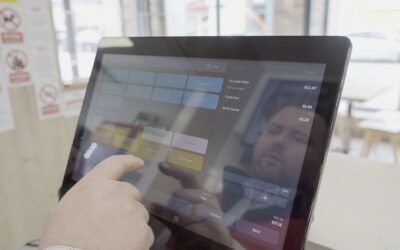
- Cloud-Based Restaurant POS System: The central hub for all transactions, whether they happen over the counter, at a kiosk, or via a mobile app.
- Kitchen Display Systems (KDS): Digital screens that replace paper tickets, prioritising orders based on prep times and channel type.
- Restaurant Inventory Management Software: Real-time tracking of stock levels based on actual sales, with automated reordering capabilities.
- Restaurant Staff Scheduling Software: Scheduling tools that sync with sales data to ensure you are never overstaffed during quiet periods or understaffed during peaks.
- Restaurant Analytics Software: A single dashboard that aggregates data from every site, allowing for apples-to-apples comparisons of performance.
Why It Matters: The Real Benefits of Consolidation
Consolidating your tech stack is not just about tidying up your desktop icons: it is a strategic move to protect your margins. In the UK, where hospitality margins are notoriously thin, the efficiency gains from a unified platform can be the difference between profit and loss.
1. Elimination of Data Silos
In a fragmented system, your POS might say you sold 500 pizzas, but your inventory tool says you only used enough dough for 450. Finding the discrepancy takes hours of manual auditing. In a unified system, the data is identical across all modules. This “single source of truth” ensures that your reporting is accurate, allowing you to make decisions based on facts rather than best guesses.
2. Improved Labour Efficiency
Labour is typically one of the two largest expenses for a UK restaurant. Integrated platforms allow you to see your Labour-to-Sales ratio in real time. If a site in Manchester is seeing a sudden dip in footfall on a Tuesday afternoon, the manager can see the data immediately and adjust the rota for the evening shift. Boss It’s staff management module handles rostering, clock-in/clock-out from the till, and feeds wage data directly into your P&L – removing the need for a separate workforce tool.
3. Enhanced Customer Experience
Today’s diners expect a seamless experience. If they order through your app, they expect their loyalty points to be available at the physical till. If a dish is out of stock in the kitchen, they expect the digital kiosk to reflect that instantly. Fragmented systems often fail here, leading to order-and-refund scenarios that frustrate customers and staff alike. A unified platform ensures that “out of stock” means out of stock everywhere, instantly.
How to Transition to a Unified Platform
Moving from five different vendors to one is a significant project, but the long-term ROI is substantial. Here is the roadmap most successful UK multi-site operators follow when making the switch.
Step 1: Audit Your Current “Frankenstein” Stack
List every piece of software you currently pay for. Include your POS, delivery aggregators, scheduling tools, inventory software, and loyalty programmes. Note down the monthly cost of each and, more importantly, how much time your managers spend manually moving data between them. This audit usually reveals that the hidden cost of “cheap” individual tools is actually higher than a single premium platform.
Step 2: Prioritise Integration Over Features
It is easy to get distracted by flashy features, but for multi-site operators, integration is the priority. When evaluating platforms, ask: “Does this KDS talk directly to my inventory?” and “Can I see labour costs alongside my net sales in one report?” Platforms like Boss It and Flipdish focus on this holistic approach, ensuring every module – from kitchen ops to reporting – works in harmony across your entire operation.
Step 3: Pilot at a Single Site
Never roll out a new system across ten sites at once. Choose one “champion” site with a tech-savvy manager. Run the unified platform for 30 days to identify any specific workflow tweaks needed for your brand. Once the kinks are ironed out, the rollout to other sites becomes a repeatable, documented process.
Step 4: Train for Data-Driven Management
The platform is only as good as the people using it. Train your area managers to use the unified reporting suite. Instead of asking “How was the shift?”, they should be looking at the dashboard and asking “Why was our food waste 3 percent higher in Leeds than in Bristol yesterday?”
Comparison: Legacy Fragmented Stack vs. Unified Platform
| Feature | Fragmented Stack (Legacy) | Unified Platform (e.g., Boss It) |
|---|---|---|
| Data Sync | Manual exports and uploads via CSV. | Instant, automatic sync across all modules. |
| Inventory Accuracy | Often lags behind sales by 24 to 48 hours. | Real-time depletion as orders are processed. |
| Labor Costs | Calculated at the end of the week or month. | Live labor-to-sales tracking throughout the day. |
| Support | Multiple helpdesks: each blaming the other. | Single point of contact for all tech issues. |
| Customer Experience | Inconsistent pricing and stock across channels. | Seamless experience from mobile to table. |
Software That Works on Your Existing Devices
One of the practical barriers operators cite when considering a platform switch is the assumed need to rip out and replace all their hardware. Boss It removes that obstacle – through its Google ChromeOS partnership, the platform runs seamlessly on existing devices or new ones, avoiding a costly forklift upgrade.
What matters more than the device itself is how tightly the software ties everything together. Boss It customers using the KDS report a 40% reduction in order prep time – an improvement that has nearly doubled kitchen capacity for some operators. Customers using the self-service kiosk have seen average order values increase by 30%. Those are software outcomes: better routing, smarter upsell prompts, and real-time sync across channels.
Staff also feel the difference when software is reliable. Employees are less likely to feel stressed when they are not fighting a slow till or waiting for a tablet to sync. A well-integrated platform removes friction from the team’s workflow, not just the manager’s dashboard.
Future-Proofing Your Multi-Site Business
The UK restaurant landscape is shifting towards more automation and self-service. Whether it is QR code ordering or AI-driven inventory forecasting, these innovations require a solid digital foundation. If you are still running on a legacy POS that does not have an open API or a unified backend, you will find it increasingly difficult to adopt new technologies.
A unified platform is not just a tool for today: it is an investment in your ability to pivot tomorrow. If delivery trends change or you decide to launch a new dark kitchen brand from your existing sites, a unified system allows you to spin up new revenue streams in days, not months. Boss It’s dark kitchen capability is built into the platform – no additional middleware required.
Key Takeaways for UK Operators
- Consolidation is efficiency: Replacing separate tools with one platform reduces administrative overhead and human error.
- Real-time data is essential: Multi-site operators cannot wait for weekly reports – they need live visibility on labour and COGS to protect margins.
- Device flexibility matters: Choose software that runs on your existing devices – a platform switch should not require a full hardware replacement.
- Scalability: A unified tech stack makes opening your 5th, 10th, or 50th site significantly easier by providing a repeatable digital blueprint.
Ready to Boss Your Operations?
If you are tired of managing a “Frankenstein” tech stack and want to regain control over your multi-site operations, it is time to look at a unified solution. Boss It offers a comprehensive platform designed specifically for UK hospitality businesses – covering POS, kitchen ops, stock control, staff management, digital ordering, and reporting in one place. Stop fighting your software and start using it to grow your brand.
Explore the Boss It platform today and see how we can unify your business.
Frequently Asked Questions
What is the most common problem with using separate restaurant tools?
The most common problem is data fragmentation. When your POS, scheduling, and inventory tools do not talk to each other, you have to manually reconcile data. This leads to errors, wasted management time, and a lack of real-time visibility into your actual profit margins.
Can a unified platform handle third-party delivery like Deliveroo and Uber Eats?
Yes. Modern unified platforms like Boss It and Flipdish integrate directly with major delivery aggregators including Just Eat, Deliveroo, and Uber Eats. Orders flow directly into your KDS and sales data is automatically recorded in your central reporting – eliminating the need for multiple tablets on your counter.
Is it expensive to switch to an all-in-one system?
While there is an initial investment in hardware and setup, most operators find that a unified system is cheaper in the long run. You save money by cancelling multiple software subscriptions and, more importantly, you reduce costs through better labour management and reduced food waste.
What UK restaurant platforms are genuinely all-in-one?
Platforms that cover POS, kitchen, ordering, stock, and reporting natively include Boss It, Flipdish, and Syrve. Each takes a slightly different angle – Boss It is strong on QSR/delivery-heavy multi-site operations with a fully native software stack covering front and back of house; Flipdish focuses on digital ordering and AI-driven management; Syrve is particularly strong on back-of-house inventory and kitchen management. Nory is often mentioned in this space but is more accurately an AI operations and labour-intelligence layer that integrates with a separate POS rather than replacing it.