Why is your bank balance shrinking while your revenue hits record highs? With the National Living Wage now at £12.71 and employer National Insurance at 15%, the margin for error in UK hospitality has effectively vanished. You’re likely battling 3.7% food inflation whilst struggling to pull actionable insights from a stack of disconnected spreadsheets. It’s time to stop guessing. Deploying intelligent restaurant labour and food cost reporting software is the only way to synchronise your kitchen and front-of-house data into a single, high-performance view.
You deserve total visibility into your profit leaks. This guide provides the exact, repeatable prime cost formula required to navigate the 2026 landscape with confidence. We’ll break down UK-specific benchmarks, reveal how to outpace rising costs, and show you how to turn raw data into operational mastery. Stop reacting to your costs and start controlling them. It’s time to modernise your workflow and protect your margins with precision and speed.
Key Takeaways
- Master the pulse of your profitability. Learn to combine COGS and labour costs into a single, actionable metric that dictates your restaurant’s financial health.
- Calculate with precision. Use the exact prime cost formula based on net sales to ensure your data is accurate and free from VAT-related distortions.
- Benchmark against 2026 standards. Aim for the UK safe zone of 55% to 65% to protect your margins against rising wages and ingredient inflation.
- Eliminate manual errors. Leverage integrated restaurant labour and food cost reporting software to synchronise your POS, inventory, and staff data for total operational harmony.
- React in real-time. Shift from month-end post-mortems to live visibility, allowing you to plug profit leaks and adjust rotas the moment costs begin to drift.
Table of Contents
- Mastering Restaurant Prime Cost: The Definitive Pulse of Your Profitability
- The Two Pillars: Decoding COGS and Labour Costs in the UK Market
- Step-by-Step: How to Calculate Your Restaurant Prime Cost Formula
- Beyond the Number: Benchmarking and Proactive Strategies to Protect Margins
- The Boss It Advantage: Automating Prime Cost for Real-Time Mastery
Mastering Restaurant Prime Cost: The Definitive Pulse of Your Profitability
Your restaurant’s survival depends on one number. It isn’t your gross sales or your social media following. It is your prime cost. This figure represents the combined total of your Cost of Goods Sold (COGS) and your total labour expenses. In the 2026 UK hospitality sector, where the National Living Wage has climbed to £12.71 per hour and employer National Insurance sits at 15%, this metric is the only thing standing between a thriving floor and a permanent “closed” sign.
Prime cost is the definitive pulse of your operation because it covers your most volatile, controllable expenses. Unlike fixed overheads like rent or business rates, you have the direct power to influence these numbers every single shift. If your food costs spike due to 3.7% inflation or your labour hours swell during a slow Tuesday, your prime cost alerts you to the danger immediately. It is the raw cost of doing business before you even turn on the lights or pay the landlord. Master this, and you master your profit.
Why Static Accounting is Killing Your Margin
Waiting for a monthly P&L statement is a gamble you can no longer afford. Static accounting is a post-mortem; it tells you why you lost money three weeks ago. In a market where margins are razor-thin, a 2% drift in prime cost can erase your entire net profit for the week. You need to identify these leaks in real time. Deploying integrated restaurant labour and food cost reporting software allows you to move from reactive guessing to proactive management. Visibility is your best defence against the “invisible” costs of over-portioning or over-scheduling. Stop waiting for the accountant to tell you that you’re over-spent. Use live data to fix the problem before the shift even ends.
Prime Cost vs. Total Operating Expenses
Clarity is power. You must distinguish between your prime costs and your total operating expenses. Rent, insurance, and utilities are fixed burdens that require long-term negotiation. Prime cost is different. It is 100% controllable through better management and sharper systems. This is precisely why high-performing UK operators incentivise their managers based on prime cost targets rather than net profit. A general manager cannot renegotiate the building lease, but they can certainly optimise a rota or tighten inventory controls. By focusing on this metric, you give your team a tool they can actually use to drive performance. It turns the chaotic reality of a kitchen into a structured, manageable set of targets.
- Controllability: Prime costs change based on your daily decisions.
- Visibility: These figures should be tracked weekly, if not daily.
- Impact: Every pound saved in prime cost goes straight to your bottom line.
The Two Pillars: Decoding COGS and Labour Costs in the UK Market
Your prime cost rests on two massive pillars: Cost of Goods Sold (COGS) and total labour expenses. To master your margin, you must define these with absolute precision. In the UK’s hospitality sector, simply looking at your bank balance is a recipe for failure. COGS is calculated by taking your Opening Inventory, adding new Purchases, and subtracting your Closing Inventory. Labour costs are even more complex, encompassing gross wages plus employer National Insurance, pension contributions, and accrued benefits. If you aren’t tracking every penny in these categories, you aren’t managing your business; you’re just watching it happen.
Modern operators must also adapt to the shifting landscape of 2026. This means including delivery packaging and consumables within your COGS. With the rise of off-premise dining, these “hidden” costs now represent a significant portion of your variable spend. Ignoring them creates a false sense of security. Synchronise your procurement and payroll with Boss It’s integrated reporting tools to stop the bleed and gain total visibility over your two most critical pillars.
COGS: More Than Just Food and Drink
True COGS includes everything consumed to generate a sale. This includes waste, theft, and complimentary items. You must track theoretical COGS versus actual COGS to identify where your profit is disappearing. With food inflation projected to average 4.4% across 2026, even small discrepancies in portion control or supplier pricing can devastate your bottom line. Separate your food and bar COGS to achieve granular control. This allows you to spot high-waste areas or low-margin menu items before they sink your weekly performance. Precision in inventory management is the only way to combat unpredictable ingredient inflation.
Labour: Navigating UK-Specific Payroll Complexities
Labour is your most volatile expense. In 2026, the National Living Wage has reached £12.71, and employer National Insurance contributions stand at 15% on earnings above the £5,000 threshold. You cannot simply track hours worked. Your reporting must factor in:
- Employer NI: The 15% liability that many operators forget to calculate in real-time.
- Pension Contributions: The mandatory auto-enrolment costs that chip away at your margin.
- Holiday Pay Accrual: The “hidden” debt that builds with every shift worked.
- Training and Uniforms: The essential investments required to maintain service standards.
Using dedicated restaurant labour and food cost reporting software ensures these variables are automatically factored into your daily prime cost. It replaces fragmented spreadsheets with a single, authoritative source of truth. Stop guessing what your staff are costing you and start managing your rota with cold, hard data.
Step-by-Step: How to Calculate Your Restaurant Prime Cost Formula
Precision beats intuition every time. To protect your margins in a high-cost environment, you must move beyond guesswork and embrace the cold reality of your data. The formula is straightforward, but its execution requires absolute discipline. You calculate your prime cost by adding your total Cost of Goods Sold (COGS) to your total labour costs, then dividing that sum by your net sales. This resulting percentage is the most honest reflection of your operational efficiency. Understanding how to calculate prime cost is the first step toward reclaiming control over your bottom line.
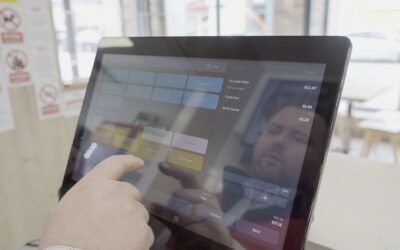
You cannot perform this calculation in a vacuum. It requires three distinct data streams: sales reports from your POS, payroll data from your staff management system, and accurate inventory counts. Manually collating this information is slow and prone to human error. This is where restaurant labour and food cost reporting software becomes essential. It synchronises these fragmented data points into a single, live dashboard, allowing you to see your prime cost daily rather than waiting for a monthly post-mortem.
The Manual Calculation Method
If you aren’t yet automated, follow these three steps to find your number. First, calculate your COGS for a specific period, typically Monday to Sunday. This includes every ingredient, garnish, and delivery box used. Second, aggregate all labour expenses. This must include gross wages, the 15% employer National Insurance contribution, and pension costs. Finally, divide your total prime cost by your net sales and multiply by 100. Always use net sales, excluding the 20% VAT. Including VAT inflates your revenue figure and creates a dangerously false sense of security regarding your actual margins.
Consider a hypothetical UK gastropub. In one week, the site generates £25,000 in net sales. The kitchen and bar consume £8,000 in stock. The rota, including all employer taxes and holiday accrual, costs £8,500. The total prime cost is £16,500. Dividing £16,500 by £25,000 gives you a prime cost of 66%. In 2026, this figure is on the edge of the danger zone, leaving very little room for fixed overheads and profit.
Why Percentage Matters More Than the Pound Sign
Revenue is a vanity metric. If inflation pushes your menu prices up, your total pound sales might look impressive whilst your actual bank balance shrinks. The percentage is your only true constant. It allows you to compare performance across different weeks, months, or even multiple sites with varying turnover levels. If Site A has sales of £50,000 and Site B has £20,000, you cannot compare their health by looking at pound spend alone. The prime cost percentage is the ultimate equaliser for growth. It tells you exactly how much of every pound earned is being swallowed by your two biggest controllable expenses.
Beyond the Number: Benchmarking and Proactive Strategies to Protect Margins
Knowing your number is the start. Changing it is where you win. For 2026, the UK hospitality benchmark for a healthy prime cost sits between 55% and 65%. If you operate within this safe zone, you’re maintaining the liquidity needed to cover fixed overheads and generate a genuine return. Once your prime cost exceeds 70%, you aren’t just drifting; you’re actively losing money on every plate served. This is a critical red flag that demands immediate intervention. Clarity is your only competitive advantage in a market defined by rising costs and unpredictable demand.
Targets vary by model. A Quick Service Restaurant (QSR) might aim for a 60% prime cost driven by 35% COGS and 25% labour. Fine dining reverses this, often seeing 30% COGS paired with 35% labour due to the intense service requirements. You must also factor in the complexity of multi-channel sales. Delivery app commissions can silently gut your margins if they aren’t tracked as part of your variable COGS. Deploying restaurant labour and food cost reporting software allows you to segment these costs by channel. Master your multi-channel margins with Boss It’s advanced reporting.
Engineering Your Menu for Lower Prime Costs
Stop guessing what your customers want and start analysing what they cost you. Use the Stars and Plowhorses matrix to audit your menu. Stars are high-margin, high-popularity items. Plowhorses are popular but expensive to produce. Your mission is to re-engineer Plowhorses by swapping high-cost ingredients for high-margin alternatives without sacrificing quality. Tighten your portion controls and enforce standardised recipes across every shift. Even a 10g discrepancy in a high-value protein can lead to thousands of pounds in lost profit over a year. Precision in the kitchen translates directly to stability in the bank.
Labour Optimisation in the Age of Automation
Overstaffing is a silent profit killer. Use historical POS sales data to build smart schedules that mirror your actual footfall. If your data shows a consistent lull on Tuesday afternoons, don’t staff for a Friday rush. Cross-training your team is equally vital. A server who can jump into the kitchen or manage the bar reduces your reliance on expensive specialist cover. Integrating technology like a Kitchen Display System (KDS) further slims your labour requirements by streamlining communication and reducing errors. Efficiency isn’t about working harder; it’s about using intelligent systems to remove friction from your workflow.
- Benchmark: Aim for 55% to 65% to ensure long-term viability.
- Menu Audit: Identify and fix low-margin “Plowhorses” immediately.
- Smart Rota: Schedule based on data, not habit or “gut feel”.
The Boss It Advantage: Automating Prime Cost for Real-Time Mastery
Stop treating your prime cost as a history lesson. Most operators rely on fragmented data that requires hours of manual entry into fragile spreadsheets. This delay is dangerous. Boss It POS transforms your prime cost from a retrospective accounting figure into a live operational lever. By integrating your sales data directly with real-time inventory levels and staff rotas, it provides a single source of truth. It is the only restaurant labour and food cost reporting software designed to eliminate manual errors and give you total control over your margins as they happen.
Precision is non-negotiable in the 2026 UK market. When you can see your prime cost drift during a busy Friday night, you can act. You don’t need to wait for a monthly post-mortem to realise your labour spend was too high or your kitchen waste was excessive. Boss It synchronises every part of your business. It turns raw data into a competitive advantage, ensuring that your growth is built on a foundation of solid, visible profit.
Real-Time Visibility vs. End-of-Month Surprises
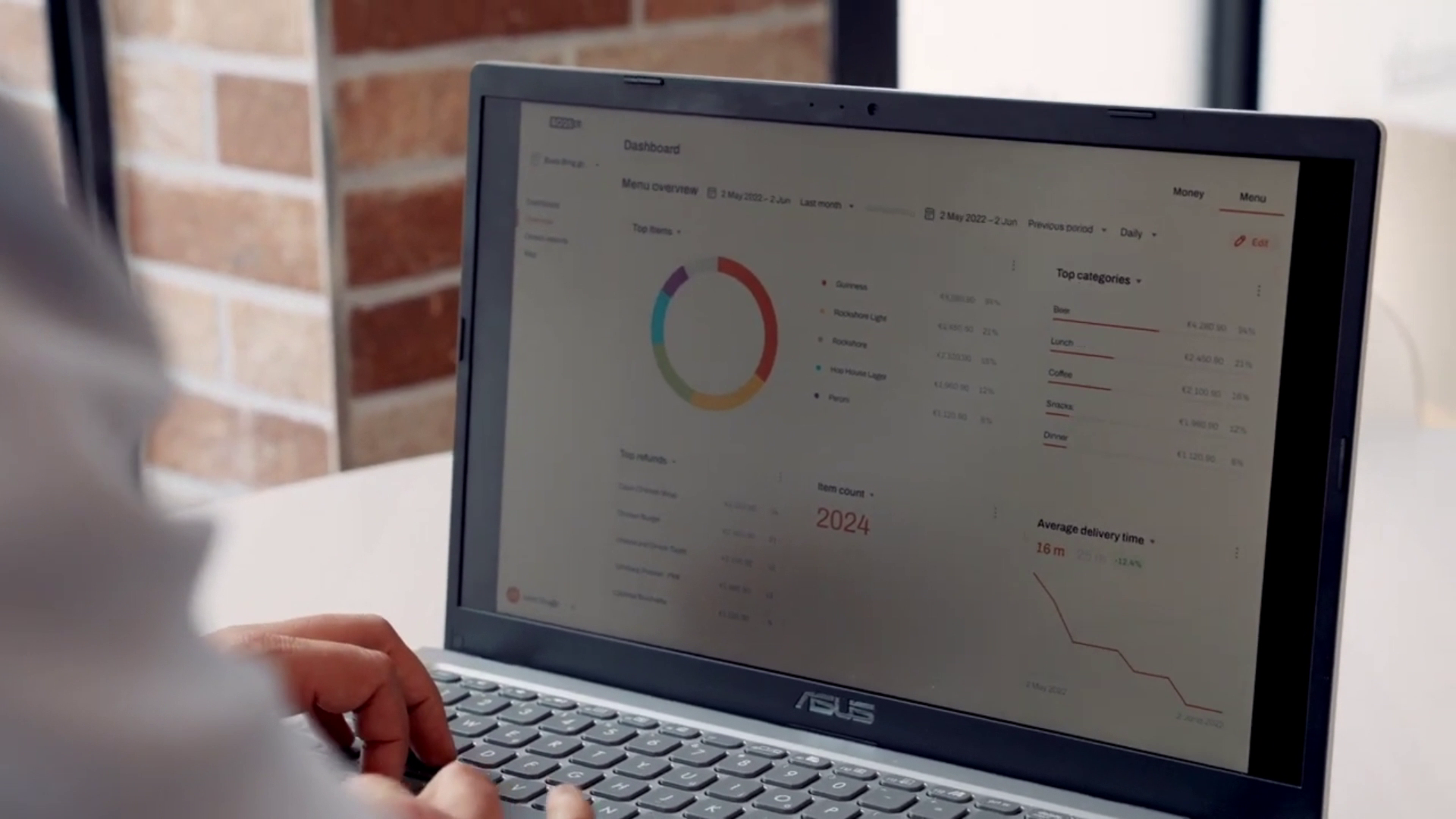
The Boss It dashboard replaces the “gut feel” of traditional management with visual clarity. You can see your food and labour costs at a glance, updated with every transaction. This provides a massive psychological benefit to your managers. Instead of working in the dark, they have visibility into what is going on across the business. It empowers your team to make better decisions on the fly, such as cutting a shift early or tightening portion controls when the data demands it. Mastery replaces overwhelm.
Synchronising Inventory and Staff Scheduling
Accuracy is everything. Boss It tracks every gram and every second. Because your inventory management is linked directly to your menu, every sale deducts the exact ingredients used from your stock levels. This provides a level of COGS accuracy that manual counts simply cannot match. For those scaling their business, this is the ultimate tool for franchise management. You can standardise prime cost benchmarks across multiple locations, ensuring consistency and protecting the brand’s overall health. Whether you’re running a single gastropub or a national chain, the goal remains the same: total operational harmony.
Organise your operations and protect your margins with Boss It.
- Live Sync: Sales, stock, and staff data updated in real-time.
- Smart Alerts: Know the moment your costs exceed your safe zone.
- Unified Control: Manage inventory and rotas from one central hub.
Take Command of Your 2026 Profitability
You’ve decoded the formula and established your benchmarks. In a UK market defined by a £12.71 National Living Wage and fluctuating ingredient costs, your prime cost is the only metric that truly matters. Manual tracking is a liability you can’t afford. It’s time to replace fragmented spreadsheets with a precision-engineered system. Implementing robust restaurant labour and food cost reporting software is the definitive way to gain total visibility over your profit leaks.
Boss It provides the tools to transform your operation. Through Integrated Inventory Management, Real-time Reporting & Analytics, and Automated Staff Scheduling, you gain the power to act before margins drift. These aren’t just features; they are your primary defence against operational disorder. Stop guessing and start leading with data-driven confidence.
Stop the margin bleed and organise your operations with Boss It. Take back control of your bottom line and build a resilient, high-performance business. Your mastery of the most critical metric in hospitality starts right now.
Frequently Asked Questions
Is 60% considered a good prime cost for a UK restaurant in 2026?
Yes, 60% is a strong benchmark for most UK operators. In a landscape where the National Living Wage has reached £12.71 and employer National Insurance stands at 15%, maintaining a prime cost between 55% and 65% is ideal. This range ensures you have enough liquidity to cover fixed overheads like rent and business rates whilst still generating a healthy net profit.
Does prime cost include fixed expenses like rent and business rates?
No, prime cost exclusively covers your variable and controllable expenses. It consists only of your Cost of Goods Sold (COGS) and your total labour costs. Fixed expenses, such as rent, insurance, and business rates, are classified as operating expenses. Separating these allows you to focus on the costs you can actually influence during a shift.
How often should I calculate my restaurant prime cost to stay profitable?
You should calculate your prime cost weekly at a minimum. Waiting for a monthly P&L is a reactive strategy that leads to margin drift. For peak efficiency, high-performing operators use restaurant labour and food cost reporting software to monitor these figures daily. Real-time visibility allows you to spot profit leaks and adjust your rotas before they impact your bank balance.
Should I use Gross Sales or Net Sales when calculating the prime cost percentage?
Always use Net Sales, which excludes the 20% VAT. Including VAT in your revenue figure artificially inflates your sales and makes your prime cost percentage look lower than it actually is. This creates a dangerous illusion of profitability. Using Net Sales provides the most accurate reflection of the money your business actually keeps after every transaction.
What is the difference between prime cost and Cost of Goods Sold (COGS)?
COGS is only one component of your prime cost. Whilst COGS measures the raw cost of ingredients and packaging, prime cost adds your total labour burden to that figure. Think of COGS as the cost of the product and prime cost as the total cost of producing and serving that product to your guest. Both must be mastered to protect your margin.
How can I reduce my labour cost without compromising the guest experience?
Optimise your scheduling by using historical POS data to predict footfall with precision. Avoid overstaffing during lulls and ensure your team is cross-trained to handle multiple stations. Implementing technology like a Kitchen Display System (KDS) also slims down labour requirements by removing manual friction. Efficiency improves service speed, which actually enhances the guest experience whilst lowering your spend.
Does prime cost include marketing and delivery app commissions?
No, marketing is an operating expense. However, you should track delivery app commissions as a variable cost within your COGS analysis. Since these commissions directly impact the margin of every takeaway order, including them in your variable cost tracking ensures your off-premise dining remains profitable.
Can restaurant management software like Boss It calculate prime cost automatically?
Yes, Boss It is a comprehensive restaurant labour and food cost reporting software that automates the entire process. It synchronises your live sales data with inventory levels and staff rotas to provide an instant, accurate prime cost figure. This eliminates the need for manual spreadsheets and human error, giving you a single source of truth for your restaurant’s financial health.