Top 6 Reasons you need a Channel Manager
By Boss It · · Updated
Channel Management for Quick Service Restaurants is often over looked but can make a world of difference to operations. Removing manual inputs and streamlining the kitchen means the kitchen can focus on the order in front of them.
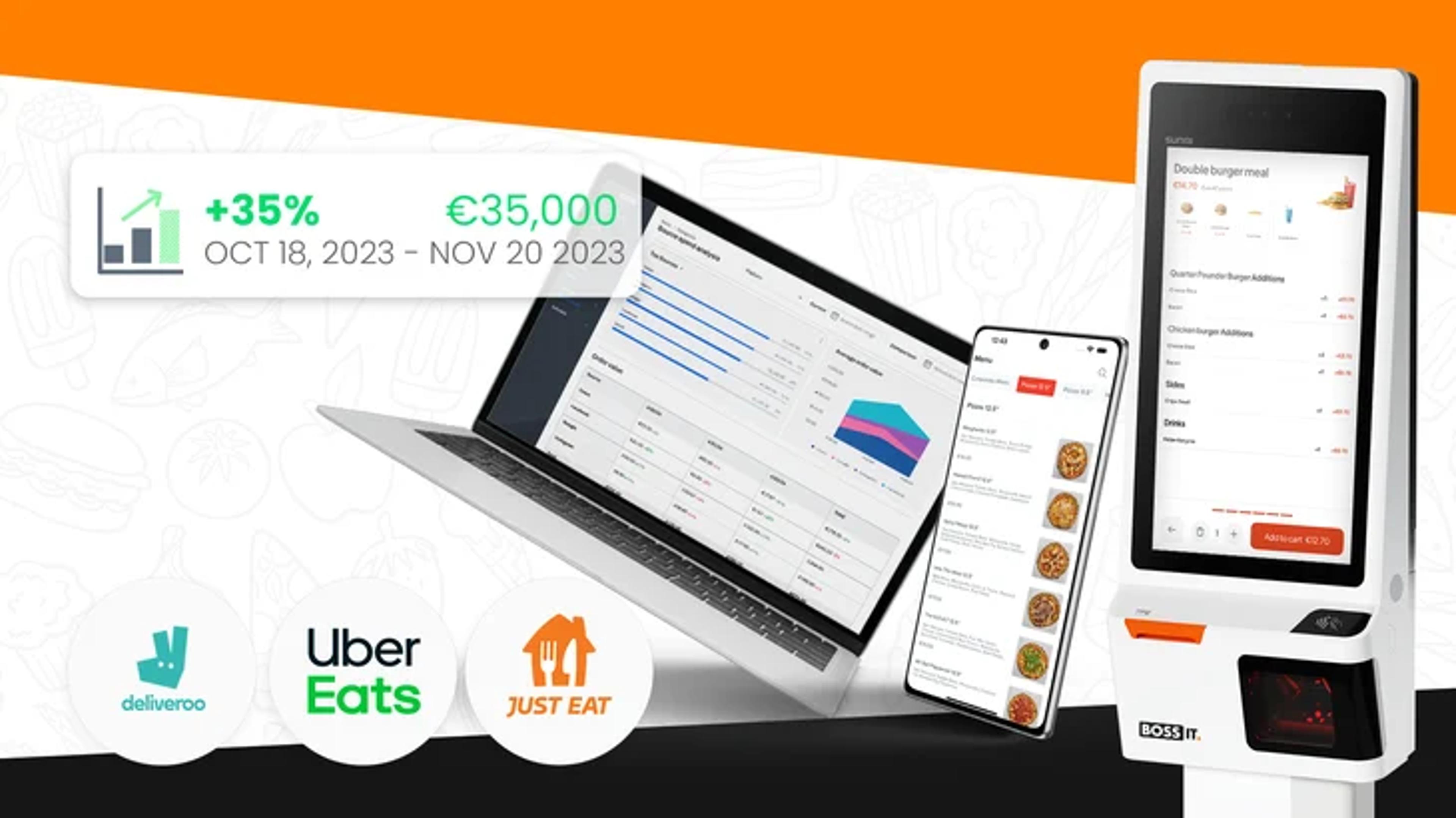
What does a channel manager encompass? Firstly you have your in-house
- Counter
- Phone
- App
- Kiosk
- Table
The you have your 3rd party apps such as
- Deliveroo
- Just Eat
- Uber Eats
Channel Management with BOSS IT
Introducing a POS system with an integrated channel manager in a Quick Service Restaurant can unlock a host of advantages, some of which may not be initially apparent to restaurant owners. Here are five compelling reasons and their significance:
- Consolidated Reporting and Analytics:
- Reason: A POS with a channel manager provides comprehensive reporting by consolidating sales data from various channels (e.g., in-house, delivery apps, online orders) into a single system.
- Importance: This allows for more accurate analysis of sales trends, customer preferences, and peak times, enabling data-driven decisions to optimise inventory, staffing, and marketing strategies.
- Improved Order Accuracy:
- Reason: Orders from different channels are automatically integrated into the POS system, reducing the need for manual entry.
- Importance: This minimises human error, ensuring that orders are prepared correctly and efficiently, which enhances customer satisfaction and reduces food waste.
- Enhanced Customer Relationship Management (CRM):
- Reason: A unified POS system can track customer data across channels particularly in-house.
- Importance: This helps in building customer profiles, understanding buying habits, and creating personalised marketing campaigns, thereby improving customer loyalty and increasing repeat business.
- Streamlined Operations and Efficiency:
- Reason: By managing all orders through one system, the workflow is streamlined, and staff can focus on preparation and delivery rather than juggling multiple platforms.
- Importance: This boosts overall operational efficiency, reduces order processing time, and ensures a smoother experience for both employees and customers.
- Centralised Inventory Management:
- Reason: A POS with a channel manager can track inventory levels in real-time across all sales channels.
- Importance: This prevents overstocking or stockouts, helps in better managing supply chains, and reduces food costs by minimising waste due to expired or unsold stock.
6. Real-Time Menu Updates:
- Reason: A POS with a channel manager allows for instant updates to menus across all sales channels.
- Importance: This ensures that any changes in pricing, availability, or new items are reflected immediately on all platforms, preventing customers from ordering items that are out of stock and reducing confusion. It also allows for quick promotion of new dishes or special offers, keeping the menu dynamic and engaging for customers.
By integrating a channel manager with their POS system, restaurant owners can gain a significant edge in managing their operations more effectively, enhancing customer satisfaction, and ultimately driving profitability. Chat to BOSS IT about how we can help your channel management.